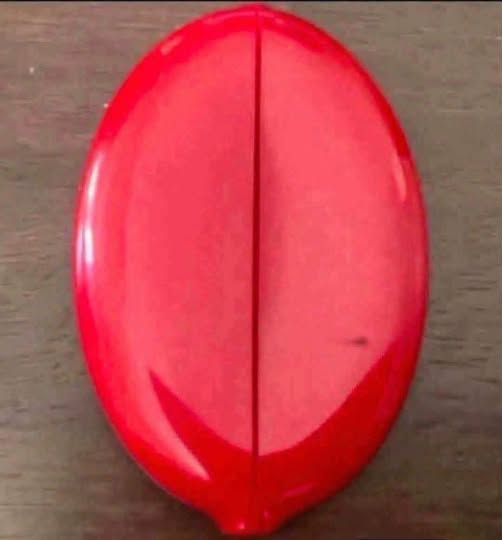
The image shows a small, bright red, oval-shaped object with a distinct vertical slit down the middle and a small nub at the bottom. At first glance, it can look like a piece of candy, a novelty toy, or even a tiny coin purse from a bygone era. Yet, as the original image suggests, many people have a hard time pinning down exactly what this object is. The confusion is understandable—it is a piece of everyday history that has largely faded from modern life, leaving younger generations guessing.
The truth is that this unassuming red oval is a vintage coin holder, often referred to as a “Quikoin” or squeeze coin purse . These simple, flexible plastic pouches were once a ubiquitous promotional item and a practical way to carry loose change. Understanding what it is and how it worked offers a fascinating glimpse into the everyday habits of the mid-to-late twentieth century.
What Exactly Is This Red Oval?
The object is a classic coin holder made from soft, flexible vinyl or plastic . Its design is deceptively simple: it consists of two flexible sides that are pressed together to create a secure seal. To open it, you squeeze the sides of the oval, which causes the central slit to pucker open, allowing you to drop in or shake out coins.
The small nub at the bottom served a dual purpose. It was often where a split ring could be attached, turning the coin holder into a keychain accessory . It also provided a tactile point to grip when squeezing the pouch open. This design was so effective and recognizable that it became a staple of American manufacturing, with the Quikey brand producing these items for over seventy years .
The Golden Age of the Squeeze Coin Purse
These coin holders were not just a niche product; they were a cultural phenomenon, particularly from the 1950s through the 1980s. They were incredibly cheap to produce, making them a favorite for businesses looking for affordable advertising. Banks, tire companies, soda brands, and local mechanics all gave them away with their logos stamped on the side . If you were a child in that era, you likely had a drawer full of them, each one a tiny, colorful billboard for a local business.
Beyond their role as promotional swag, they were genuinely practical. Before the widespread use of credit cards and digital payments, carrying exact change was a daily necessity for payphones, bus fares, vending machines, and parking meters. The squeeze pouch was a perfect solution for keeping quarters and dimes accessible without the bulk of a traditional wallet . Some people even used them to hold other small items, such as sewing kits or even loose change for a rainy day .
Why Did They Disappear?
The decline of the squeeze coin purse is tied to broader shifts in society. The rise of debit and credit cards meant people carried less cash. The ubiquity of mobile phones made payphones obsolete, removing one of the primary reasons for carrying a pocketful of quarters. Furthermore, the manufacturing of these vinyl pouches, while durable, was eventually outpaced by more modern, zippered wallets and minimalist card holders.
Today, these coin holders are primarily found in vintage shops, estate sales, and online marketplaces like eBay, where they are sold as nostalgic collectibles . For those who remember them, they evoke memories of grandparents, childhood trips to the corner store, and the satisfying “pop” of the pouch opening.
How to Tell If You Have One
If you have found one of these objects and are unsure of its identity, there are a few key features to look for. The most obvious is the squeeze-to-open mechanism. Unlike a zippered pouch or a snap-button wallet, this item has no hardware; the seal is created entirely by the tension of the flexible material. The central slit should be clean and straight, and the material should feel soft and slightly rubbery to the touch.
Another identifying feature is the presence of advertising text. Many of these were printed with the names of businesses, and finding one with a recognizable logo can help date it. A red vinyl coin purse with a Coca-Cola logo, for example, is a classic piece of soda memorabilia . Similarly, Goodyear Tire and other industrial companies frequently used them as promotional gifts . If the item is plain red with no writing, it is still likely a standard Quikey-style coin holder, just a less branded version .
A Small Object with a Big History
The red squeeze coin holder is a perfect example of how everyday objects can become mysterious over time. It was never a luxury item or a piece of high technology; it was a simple, functional tool designed to solve a small problem—how to keep your change from jingling in your pocket. Yet, its distinctive design and ubiquity have made it a recognizable artifact of a specific era.
For those who grew up using them, the sight of that red oval brings back a wave of nostalgia. For those who are seeing it for the first time, it is a curious relic that prompts a simple question: “What is this?” The answer, as it turns out, is a piece of practical design that served millions of people well before the digital age made loose change a rarity.
Conclusion
The mystery of the red oval object is solved: it is a vintage squeeze coin holder. These flexible, vinyl pouches were once a common sight in pockets, purses, and keychains across the country. They were practical, inexpensive, and often served as miniature advertisements for local businesses. While they have largely been replaced by modern wallets and digital payments, they remain a charming and recognizable piece of everyday history.
If you happen to find one tucked away in a drawer or at a flea market, take a moment to squeeze it open. It is a small, tactile reminder of a time when carrying change was a part of daily life, and when even the simplest objects were designed to be useful and durable.
Frequently Asked Questions
What is the red oval object in the image?
It is a vintage squeeze coin holder, often called a Quikoin or coin purse. It is made of flexible vinyl and is designed to hold loose change securely .
How does a squeeze coin purse work?
You squeeze the sides of the oval, which causes the central slit to open. You can then drop coins in or shake them out. When you release the pressure, the slit closes tightly to keep the coins secure .
Are these coin holders still made today?
While the original Quikey brand produced them for decades, they are no longer a common item in everyday retail. However, they are still manufactured for promotional purposes and can be purchased as novelty items or vintage collectibles .
What were these coin holders used for?
They were primarily used to carry loose change for everyday expenses like bus fare, payphones, and vending machines. They were also commonly used as promotional giveaways by businesses and sometimes repurposed to hold small items like sewing supplies or tokens .
Where can I buy one today?
You can find vintage squeeze coin holders on online marketplaces like eBay, at estate sales, or in vintage shops. They are often sold as nostalgic collectibles or advertising memorabilia .