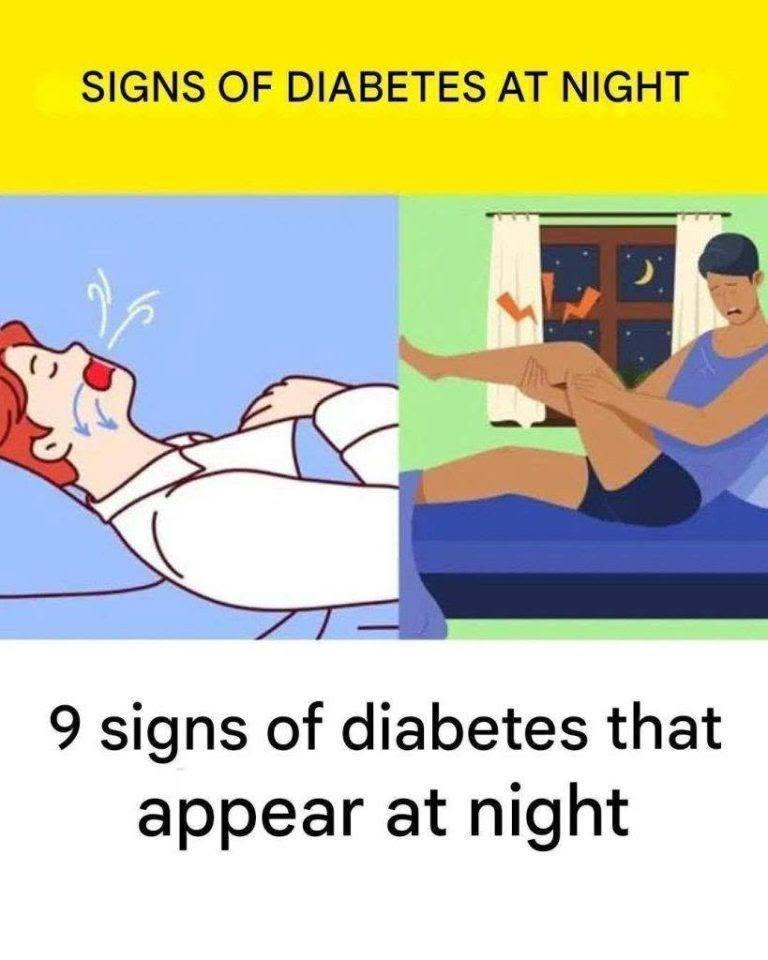
Diabetes is often described as a silent condition, and for good reason. Many people live with elevated blood sugar for years without realizing it, because the early symptoms can be subtle, easy to dismiss, or mistaken for the normal ups and downs of daily life. However, the nighttime hours can sometimes offer clues that are harder to ignore. When the body is at rest, certain symptoms become more noticeable, and several of them are directly linked to the way diabetes affects the body’s systems.
It is important to understand that waking up with a dry mouth or needing to use the bathroom overnight does not automatically mean you have diabetes. These experiences are common and can have many causes. But when several symptoms occur together, persist over time, or seem unexplained, they are worth paying attention to. This article explores nine signs that can appear at night, explaining why they happen and when it makes sense to talk to a healthcare provider.
Why Diabetes Symptoms Often Show Up at Night
To understand why diabetes can disrupt sleep, it helps to know what high blood sugar does to the body. When glucose builds up in the bloodstream instead of being used for energy, the kidneys work harder to filter it out. This process pulls water from the body, leading to increased urine production and dehydration. The nervous system can also be affected over time, and fluctuations in blood sugar can influence sleep quality.
During the day, these effects may be masked by activity, distraction, and hydration. At night, when the environment is quiet and the body is still, the signals become more apparent. This is why many people first notice something is wrong during the hours they are supposed to be resting.
Frequent Nighttime Urination
Waking up multiple times to urinate is one of the most common nighttime symptoms associated with diabetes. High blood sugar forces the kidneys to work harder to remove excess glucose, which increases urine output . This condition, known as nocturia, can interrupt sleep repeatedly and leave a person feeling exhausted the next day.
It is worth noting that nighttime urination can have other causes, particularly in older adults. For men, an enlarged prostate is a frequent culprit. For women, bladder conditions or urinary tract infections may be responsible. Drinking fluids close to bedtime can also contribute. However, if frequent urination is accompanied by unusual thirst or other symptoms on this list, it may be a signal worth investigating.
Excessive Thirst at Night
Waking up feeling intensely thirsty, even after drinking fluids before bed, is another classic sign. This symptom is closely linked to frequent urination: as the body loses water through increased urine output, it signals the need for replenishment . The thirst associated with diabetes tends to be persistent and difficult to quench, rather than a mild dry feeling that resolves with a few sips of water.
Some people also experience a need to get up and drink during the night, or they may notice they are drinking more water than usual throughout the day. If this pattern continues for several days or weeks without an obvious explanation, it is worth mentioning to a doctor.
Dry Mouth and Unusual Thirst
Related to excessive thirst is a sensation of dry mouth that is particularly noticeable at night. Reduced saliva production and dehydration can leave the mouth feeling sticky or uncomfortable. While dry mouth can be caused by medications, breathing through the mouth, or simply aging, persistent dryness combined with increased thirst and urination can point toward elevated blood sugar.
Night Sweats and Uncomfortable Sleep
Some people with diabetes experience episodes of sweating during the night, sometimes severe enough to soak through clothing or bedding. These night sweats can be related to fluctuations in blood sugar levels, particularly low blood sugar episodes that may occur during sleep. They can also be linked to the body’s general response to metabolic stress.
Night sweats have many possible causes, including hormonal changes, infections, and certain medications. In isolation, they are not a specific sign of diabetes, but when combined with other symptoms, they are worth noting.
Waking Up Hungry
Feeling hungry in the middle of the night is not unusual, but a pattern of waking up with intense hunger can sometimes be linked to blood sugar regulation issues. In some people with early type 2 diabetes, insulin release can be delayed, leading to a drop in blood sugar several hours after eating. This can trigger hunger, shakiness, or a feeling of unease during the night.
This symptom is easy to attribute to a late dinner or an active day. However, if nighttime hunger occurs regularly despite eating normally, it may be worth discussing with a healthcare provider.
Tingling or Numbness in the Hands and Feet
One of the more serious long-term complications of diabetes is nerve damage, often beginning in the extremities. Tingling, burning, or numbness in the feet and hands is a common early sign of diabetic neuropathy . These sensations can be more noticeable at night when there are fewer distractions, and they may interfere with falling asleep or staying asleep.
Neuropathy is more typical of diabetes that has been present for some time, but it can occasionally be an early symptom, particularly in type 2 diabetes that has gone undiagnosed for a while. If tingling or numbness in the feet is persistent, it warrants medical evaluation.
Leg Cramps and Restless Sensations
Some people with diabetes experience muscle cramps in the legs at night, or a restless, uncomfortable sensation that makes it difficult to keep the legs still. These symptoms can be related to nerve irritation, dehydration, or electrolyte imbalances associated with diabetes. While leg cramps and restless legs are common in the general population, a new or worsening pattern that occurs alongside other symptoms deserves attention.
Disrupted Sleep and Insomnia
The cumulative effect of frequent urination, thirst, discomfort, and other symptoms is often poor sleep. But there is another connection as well: high blood sugar itself can affect sleep quality, and poor sleep can worsen blood sugar control. People with diabetes are more likely to experience insomnia and fragmented sleep than those without the condition.
Waking up feeling unrested despite spending enough time in bed is a signal that something may be interfering with sleep. When that pattern coincides with any of the physical symptoms described above, it adds weight to the case for a medical check-up.
Slow Healing or Recurring Infections
While not exclusively a nighttime symptom, noticing a wound or sore that is healing unusually slowly can be a sign of diabetes. High blood sugar impairs circulation and the immune response, making infections more likely and healing slower . Some people also experience recurring skin or fungal infections, which may become more noticeable during the night when itching or discomfort is harder to ignore.
When to Seek Medical Advice
None of the symptoms described here are exclusive to diabetes, and having one or two of them does not mean you have the condition. What matters is the pattern. If you are experiencing several of these signs together, if they are persistent, or if they are accompanied by unexplained weight loss, fatigue, or blurry vision, it is a good idea to see a healthcare provider.
A simple blood test can check your blood sugar levels and provide clarity. Early detection of diabetes allows for timely management and reduces the risk of long-term complications. If you have risk factors such as a family history of diabetes, excess weight, or a sedentary lifestyle, being proactive about screening is especially important.
Conclusion
The body often communicates through subtle signals, and the nighttime hours can be a window into what is happening beneath the surface. Frequent urination, excessive thirst, dry mouth, night sweats, unusual hunger, tingling in the extremities, and disrupted sleep are all experiences that many people dismiss as normal. In some cases, they are. In others, they are the body’s way of indicating that blood sugar regulation needs attention.
Paying attention to these signs does not mean self-diagnosing or worrying unnecessarily. It means recognizing when something feels off and taking the sensible step of consulting a healthcare professional. Diabetes is a manageable condition, and early awareness makes a meaningful difference.
Frequently Asked Questions
Can diabetes cause symptoms only at night?
Some symptoms, such as nighttime urination and thirst, are more noticeable at night because the body is at rest and the environment is quiet. However, diabetes symptoms can occur at any time of day. Nighttime symptoms are often part of a broader pattern that includes daytime fatigue, increased thirst, and other signs.
Is waking up to urinate at night always a sign of diabetes?
No. Waking to urinate is common and can be caused by drinking fluids before bed, age-related changes, prostate enlargement in men, or other conditions. It becomes more suggestive of diabetes when it occurs frequently alongside excessive thirst, unexplained fatigue, or other symptoms on this list.
Can diabetes cause night sweats?
Yes, some people with diabetes experience night sweats, often related to fluctuations in blood sugar levels. However, night sweats have many possible causes, including hormonal changes, infections, and medications, so they should be evaluated in context rather than treated as a definitive sign of diabetes.
What does tingling in the feet at night mean?
Tingling or numbness in the feet can be a sign of diabetic neuropathy, a type of nerve damage caused by prolonged high blood sugar. It can also have other causes, including vitamin deficiencies, spinal issues, and certain medications. Persistent tingling should be evaluated by a healthcare provider.
When should I get tested for diabetes?
You should consider testing if you experience several symptoms on this list, especially if they persist. Testing is also recommended if you have risk factors such as a family history of diabetes, excess weight, or a sedentary lifestyle. A healthcare provider can advise on appropriate screening.