Place the puff pastry sheets on parchment-lined baking trays.
Prick them lightly with a fork to prevent excessive puffing.
Bake according to the pastry package directions, usually for approximately 12–18 minutes, until deeply golden and crisp.
Allow the pastry to cool completely.
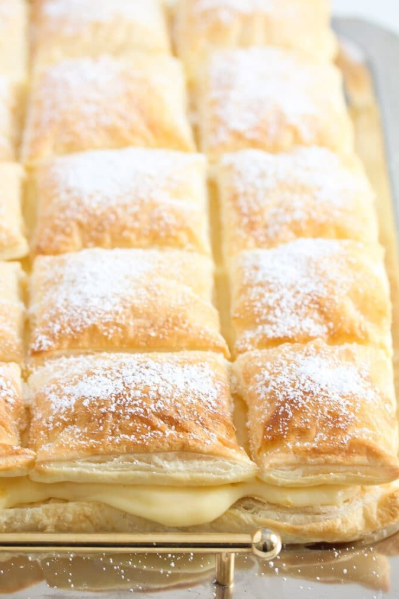
For easier serving, one pastry sheet can be cut into squares or rectangles before assembling the cake. This makes slicing the finished dessert much easier.
2. Make the Vanilla Custard
Pour the milk into a large saucepan and heat until hot but not boiling.
In a separate bowl, whisk the egg yolks with the sugar and flour until smooth.
Gradually whisk some of the hot milk into the egg mixture to temper the eggs.
Pour the mixture back into the saucepan.
Cook over medium-low heat, stirring constantly, until the custard becomes thick and creamy.
Remove from the heat and stir in the vanilla extract and vanilla sugar if using.
3. Whip the Egg Whites
Place the egg whites in a clean bowl.
Add a pinch of salt and beat until soft peaks form.
Gradually add a small amount of sugar if desired, continuing to beat until the whites become glossy and stable.
4. Combine the Cream
While the custard is still warm, gently fold the whipped egg whites into it in several additions.
Fold carefully rather than stirring vigorously so the mixture stays light and airy.
The finished cream should be smooth, fluffy, and thick enough to hold its shape.
5. Assemble the Krémes
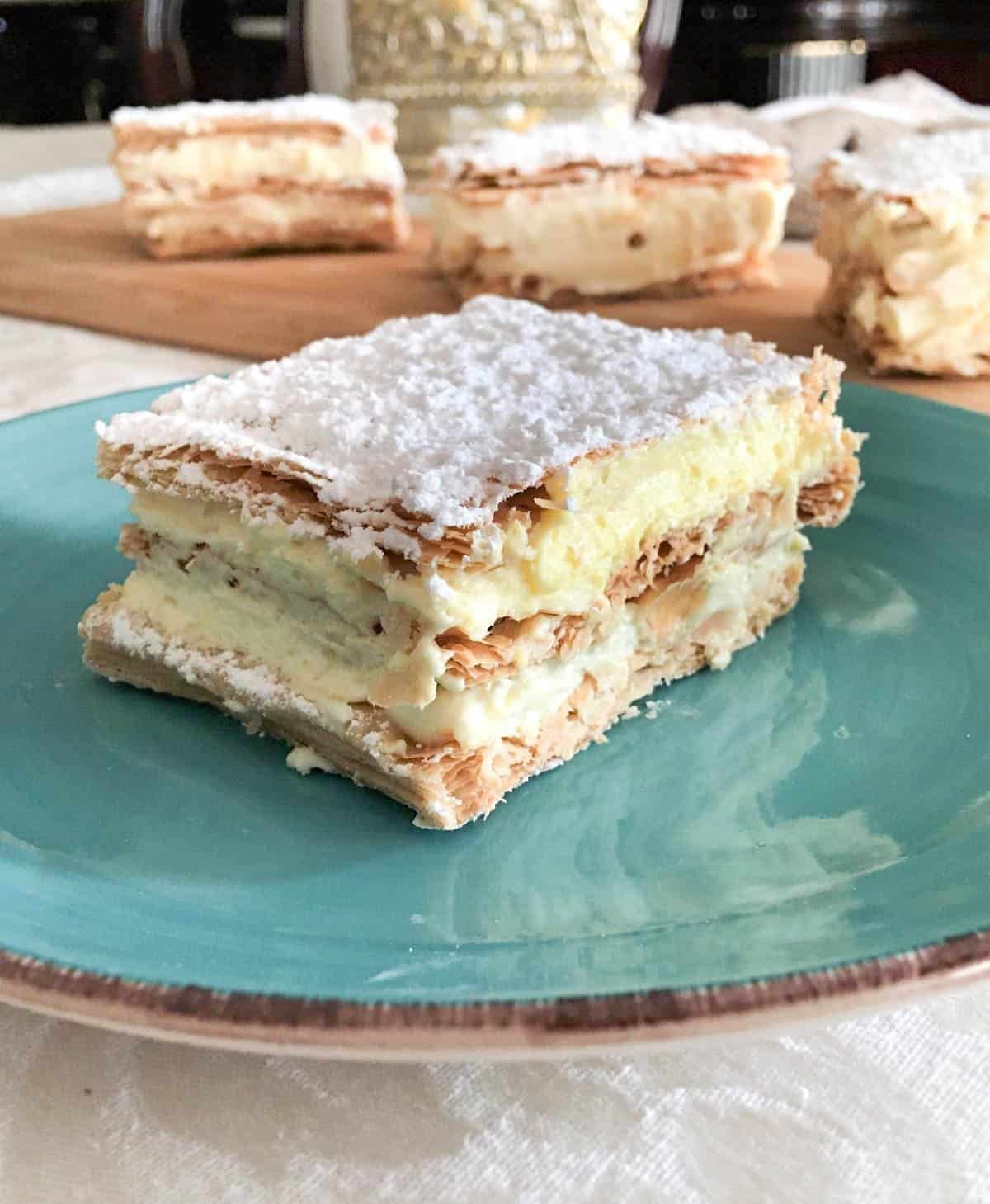
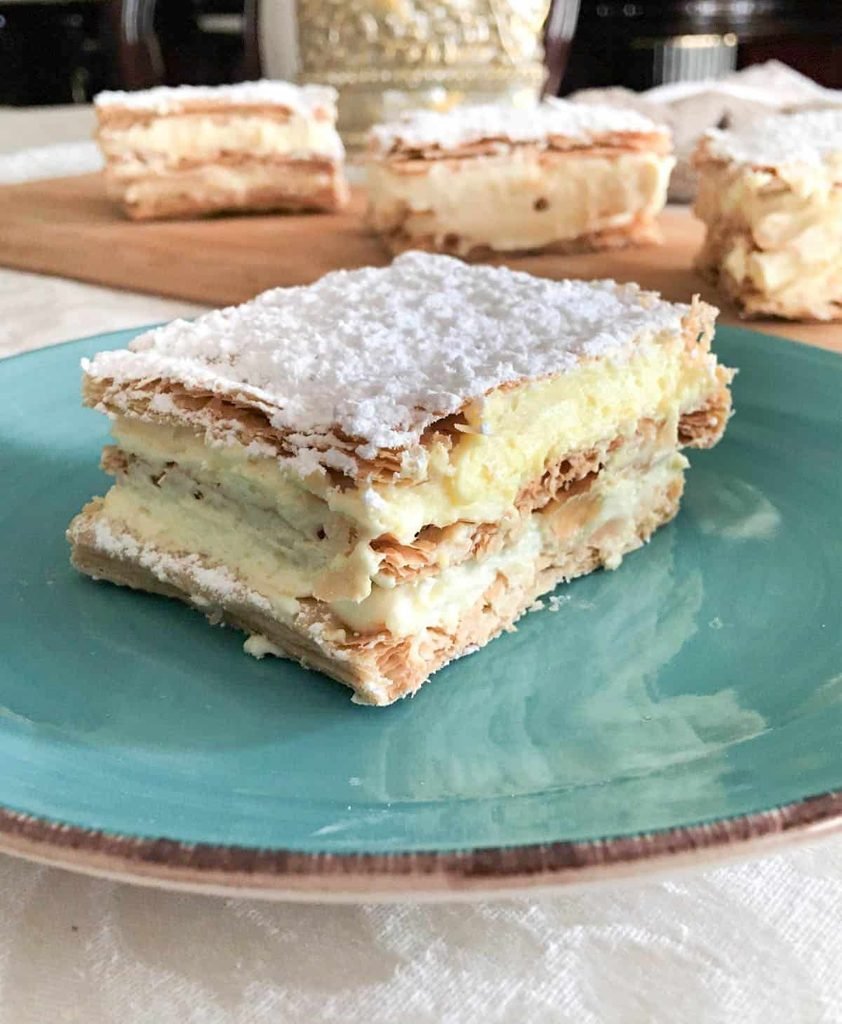
Place the first sheet of baked puff pastry in the bottom of a rectangular baking dish or pastry frame.
Spread the warm vanilla cream evenly over the pastry.
Smooth the surface with a spatula.
Place the second pastry sheet on top.
Press very gently so the layers sit together without squeezing out the cream.
6. Chill
Refrigerate the assembled Krémes for at least 4 hours, preferably overnight.
This allows the cream to set firmly and makes the pastry easier to portion.
7. Finish and Serve
Before serving, generously dust the top with powdered sugar.
Use a sharp serrated knife to cut the pastry into neat squares or rectangles.
Serve chilled.
Helpful Tips
Bake the pastry until fully crisp: Underbaked puff pastry can become soft once it is layered with the cream.
Cool the pastry completely: Warm pastry can cause the cream to soften too much.
Keep stirring the custard: Constant stirring helps prevent lumps and scorching.
Fold gently: Carefully incorporating the whipped egg whites keeps the filling light.
Chill thoroughly: Krémes needs enough time in the refrigerator for the filling to become firm enough to slice.
Cut the top pastry first: Pre-cutting the top sheet makes serving much easier and prevents the cream from being crushed.
What Makes Hungarian Krémes Special?
The defining feature of Hungarian Krémes is the contrast between crisp puff pastry and light vanilla cream.
The pastry provides a delicate crunch, while the custard filling is smooth, rich, and airy. The powdered sugar on top adds just enough sweetness and creates the familiar finish seen in Hungarian pastry shops.
Unlike many elaborate layer cakes, Krémes relies on a handful of simple ingredients, allowing the texture and quality of the pastry and cream to take center stage.
How to Serve Hungarian Krémes
Krémes is traditionally served chilled and dusted generously with powdered sugar.
It pairs wonderfully with:
Strong coffee
Espresso
Black tea
Cappuccino
Hot chocolate
The creamy texture also makes it particularly enjoyable as an afternoon dessert.
Hungarian Krémes vs. Other Custard Slices
Krémes belongs to a broader family of European custard pastries, but Hungarian versions are particularly known for their generous vanilla cream filling between layers of crisp pastry.
Recipes can vary from family to family and bakery to bakery. Some versions use a very light, airy custard, while others have a denser pastry-cream texture.
The common elements are the flaky pastry, rich vanilla filling, and powdered-sugar finish.
Storage
Keep Krémes refrigerated in a covered container.
For the best texture, enjoy it within 2–3 days. The pastry gradually softens as it absorbs moisture from the cream, so it is best when served relatively fresh.
A Taste of Hungarian Tradition
Krémes is a familiar sight in Hungarian cafés, bakeries, and pastry shops. Its elegant appearance and delicate texture have made it one of the country’s best-loved cream pastries.
It is especially appealing because it feels luxurious without relying on complicated decoration. The beauty comes from the golden pastry, generous cream filling, and simple powdered-sugar finish.
Conclusion
🇭🇺 Hungarian Krémes is a timeless pastry featuring layers of golden puff pastry and a wonderfully smooth vanilla cream filling.
Crisp, creamy, delicate, and satisfying, it is a beautiful example of Hungarian pastry-making. Served chilled with a cup of coffee, homemade Krémes makes an unforgettable dessert for family gatherings, celebrations, or a relaxing afternoon treat.