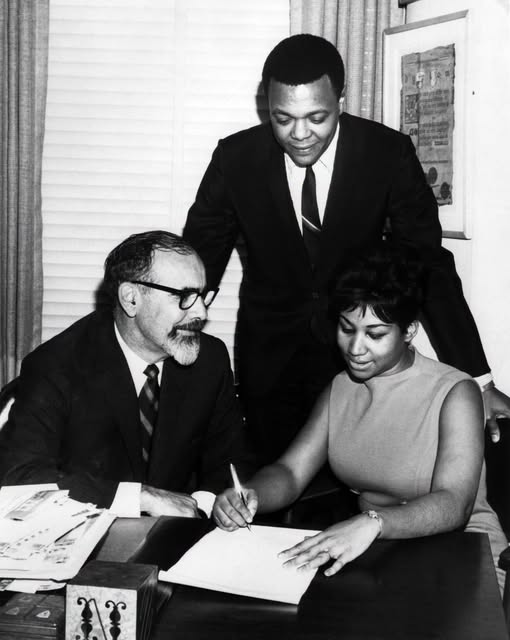
Before 1966, Aretha Franklin was not yet the “Queen of Soul.” She was a talented young singer from Detroit who had spent six years at Columbia Records. During that time, the label tried to mold her into a jazz and pop chanteuse, dressing her in elegant gowns and having her sing standards and show tunes. While her voice was undeniably magnificent, the material often felt stiff and restrained. The raw, church-rooted power that defined her was being smoothed over by producers who didn’t quite understand her. Aretha later admitted that she felt creatively boxed in and frustrated by the lack of soul and grit in her recordings. She was a star, but she hadn’t yet become an icon.