Add the yeast and sugar, stir gently, and let the mixture stand for about 5–10 minutes, until lightly foamy.
2. Make the Dough
In a large bowl, combine the flour and salt.
Add the softened butter, sour cream, egg yolks, and activated yeast mixture.
Add the grated cheese and black pepper if using.
Mix everything together until a soft dough forms.
Transfer the dough to a lightly floured surface and knead gently until smooth. Avoid over-kneading.
3. Let the Dough Rest
Shape the dough into a ball and place it in a lightly greased bowl.
Cover and let it rest in a warm place for approximately 1 hour, or until it becomes noticeably puffy.
4. Roll and Fold
Transfer the dough to a lightly floured work surface.
Roll it into a rectangle about ½ inch (1–1.5 cm) thick.
For a more layered texture, fold the dough into thirds, then roll it out again.
Repeat the folding and rolling process once or twice.
Allow the dough to rest for about 10–15 minutes between folds if it becomes difficult to handle.
5. Shape the Pogácsa
Roll the dough to approximately ½–¾ inch (1.5–2 cm) thick.
Using a small round cookie cutter or glass, cut out circles.
Place them on a parchment-lined baking sheet.
Traditional Pogácsa often have a distinctive crosshatch pattern on top. Carefully score the surface of each piece with a sharp knife without cutting all the way through.
6. Add the Topping
Brush the tops with beaten egg.
Sprinkle generously with grated cheese.
Allow the shaped Pogácsa to rest for another 15–20 minutes while the oven preheats.
7. Bake
Preheat the oven to 375°F (190°C).
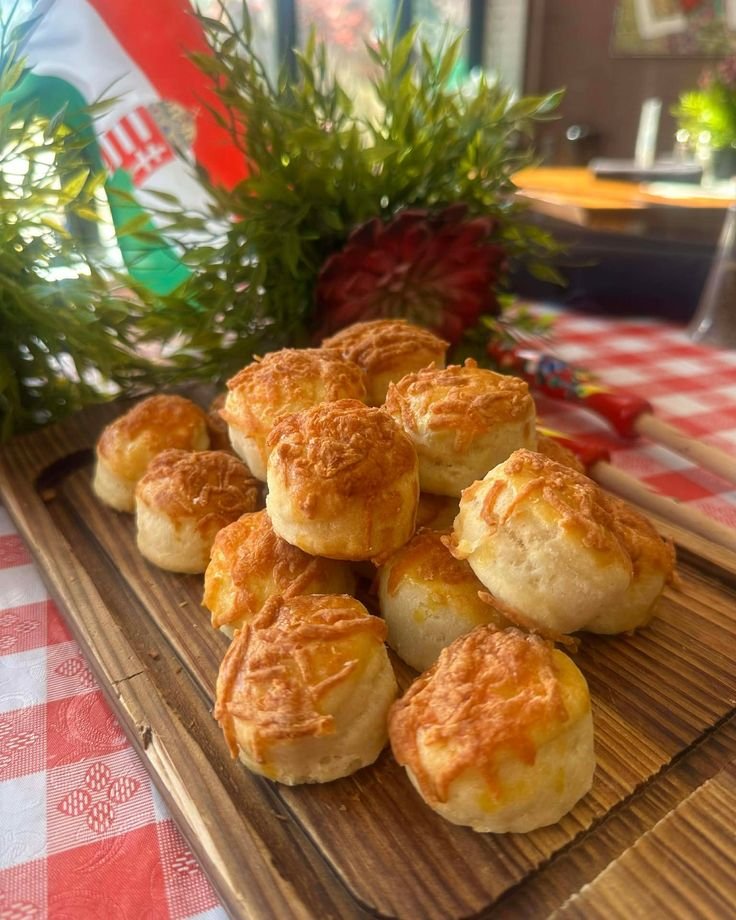
Bake the Pogácsa for approximately 18–25 minutes, or until they are puffed and beautifully golden brown.
The cheese on top should be melted and lightly browned.
8. Cool and Serve
Remove the Pogácsa from the oven and allow them to cool for a few minutes on the baking sheet.
Serve warm or at room temperature.
Helpful Tips
Use flavorful cheese: Cheddar, Gouda, Edam, or a similar semi-hard cheese can work well, while Hungarian versions may use local cheeses.
Keep the butter cool: Softened butter is easy to incorporate, but the dough should not become overly warm.
Do not add too much flour: A slightly soft dough helps produce tender Pogácsa.
Score the tops: The traditional crosshatch pattern gives the scones their distinctive appearance and helps the layers open during baking.
Bake until golden: Proper browning develops the buttery, cheesy flavor and gives the pastry its characteristic crisp exterior.
Variations of Hungarian Pogácsa
Pogácsa comes in many varieties across Hungary. Some popular versions include:
Sajtos Pogácsa – cheese scones
Tepertős Pogácsa – made with crispy pork cracklings
Burgonyás Pogácsa – potato scones
Krumplis Pogácsa – another potato-based variation
Juhtúrós Pogácsa – made with sheep’s milk cheese
Each version has its own texture and flavor, but all share the familiar small, round shape associated with traditional Hungarian Pogácsa.
What Makes Pogácsa Special?
Hungarian Pogácsa are appreciated for their combination of simplicity and texture. The outside becomes lightly crisp and golden, while the inside remains soft, buttery, and tender.
The cheese adds a savory richness, while sour cream contributes moisture and a delicate tang.
Freshly baked Pogácsa also have a wonderful aroma that makes them especially appealing at gatherings.
How to Serve Hungarian Cheese Scones
Sajtos Pogácsa can be served as a snack, appetizer, or accompaniment to a meal.
They pair beautifully with:
Hot coffee
Tea
Soup
Fresh salads
Cheese and cold cuts
Hungarian-style stews
They are also perfect for taking along to picnics, parties, or family gatherings.
Storage
Store completely cooled Pogácsa in an airtight container at room temperature for up to a few days.
To refresh them, warm them briefly in a preheated oven. This can help restore some of their crisp exterior and soft center.
For longer storage, the baked scones can be frozen and reheated when needed.
A Taste of Hungarian Tradition
Pogácsa has a special place in Hungarian food culture. These small savory pastries are often associated with hospitality and celebrations and can be found in many Hungarian homes and bakeries.
Their versatility is one of their greatest strengths: they can be enjoyed as a simple everyday snack or prepared as part of a larger festive spread.
Conclusion
🇭🇺 Hungarian Cheese Scones (Sajtos Pogácsa) are delicious little savory pastries with a golden cheesy crust and a tender, buttery center.
Easy enough for everyday baking yet special enough for celebrations, Pogácsa is a wonderful introduction to Hungarian savory baking. Serve them warm, fresh from the oven, and watch them disappear from the table.